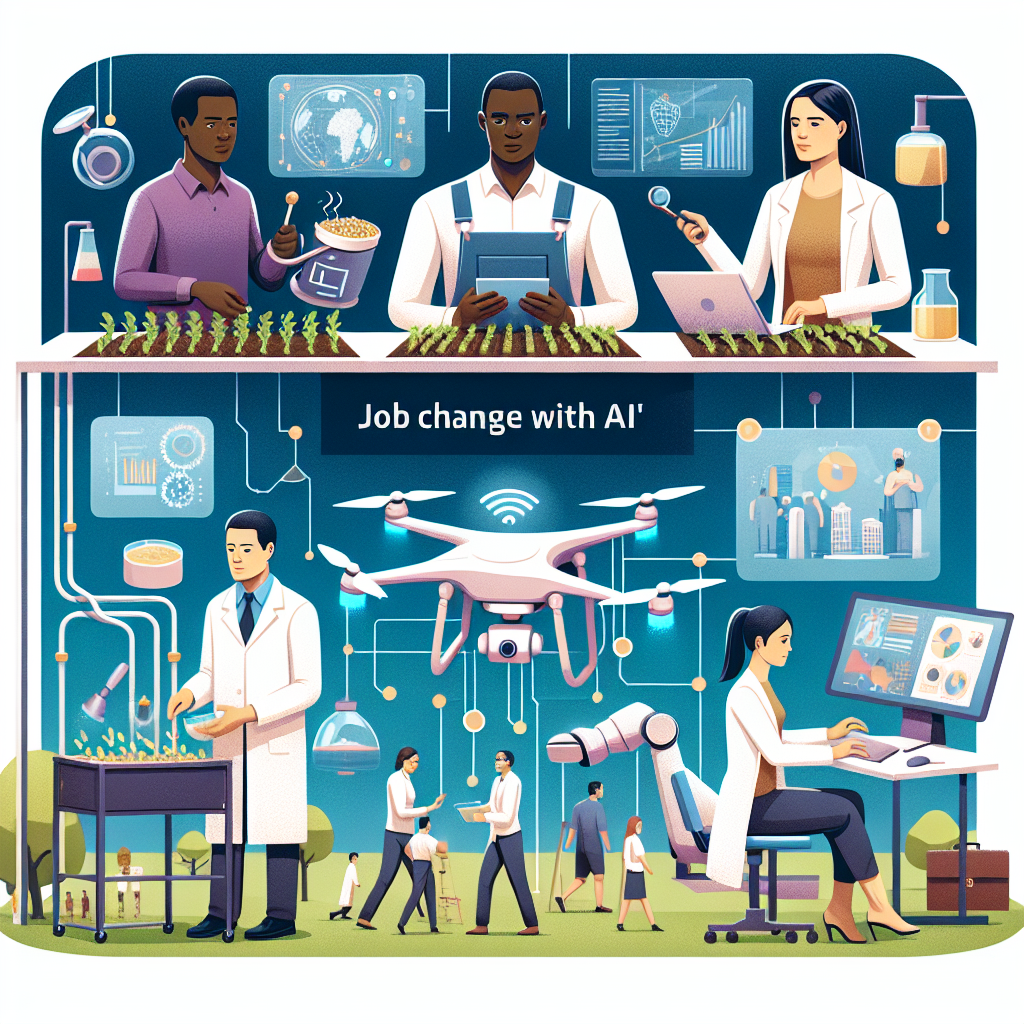
Will AI Change Jobs? Navigating the Future of Work
Will AI change jobs? Yes, artificial intelligence is already transforming the workplace. As AI technologies advance, many industries are experiencing significant shifts in how work is performed. Understanding how AI will change jobs is essential for workers, employers, and policymakers preparing for the future of work.
In this comprehensive guide, we explore which jobs are most at risk, which new opportunities are emerging, and how you can develop the skills needed to thrive in an AI-driven economy.
Will AI Change Jobs? How AI is Transforming Industries
Artificial intelligence is revolutionizing industries across the board. From manufacturing to healthcare, finance to customer service, AI-powered systems are automating routine tasks and augmenting human capabilities. This transformation is creating both challenges and opportunities in the job market.
Manufacturing and Production: Will AI Change Jobs?
AI-powered robots and automation systems are increasingly handling repetitive and dangerous tasks in manufacturing. While this improves efficiency and safety, it also means that traditional assembly line roles are declining. Workers in these sectors need to develop skills in robot maintenance, AI system monitoring, and quality control.
Healthcare: Will AI Change Jobs?
In healthcare, AI is being used for diagnostic imaging, drug discovery, and personalized treatment plans. While AI enhances the capabilities of healthcare professionals, it is also changing the nature of medical work. Doctors and nurses need to develop skills in working alongside AI tools and interpreting AI-generated insights.
Finance and Banking: Will AI Change Jobs?
The finance industry has been quick to adopt AI for fraud detection, risk assessment, and algorithmic trading. While this creates opportunities for data scientists and AI specialists, it also means that traditional roles in data entry and basic analysis are being automated.
Will AI Change Jobs? Jobs Most at Risk
While AI will impact nearly every industry, some roles are more vulnerable to automation than others:
- Data entry and processing: AI can process vast amounts of data faster and more accurately than humans.
- Customer service: AI-powered chatbots and virtual assistants are handling an increasing number of customer inquiries.
- Basic accounting and bookkeeping: AI systems can automate many routine financial tasks.
- Manufacturing assembly: Robots are increasingly capable of performing repetitive physical tasks.
- Transportation: Self-driving vehicles may eventually reduce the need for human drivers.
Will AI Change Jobs? New Opportunities Created by AI
While AI will eliminate some jobs, it will also create new opportunities:
- AI specialists and data scientists: As AI adoption grows, so does the need for experts who can develop, implement, and maintain AI systems.
- Human-AI interaction designers: Professionals who can design intuitive interfaces between humans and AI systems will be in high demand.
- AI ethics specialists: As AI becomes more prevalent, there will be growing demand for experts who can address ethical concerns and ensure responsible AI use.
- Creative and strategic roles: Jobs requiring creativity, emotional intelligence, and strategic thinking are less likely to be automated.
Will AI Change Jobs? How to Prepare for the AI Future
To thrive in an AI-driven economy, workers should focus on developing skills that complement AI capabilities:
- Critical thinking and problem-solving: These skills are essential for working alongside AI and making complex decisions.
- Creativity and innovation: AI can generate ideas, but human creativity remains essential for breakthrough innovations.
- Emotional intelligence: Jobs requiring empathy, communication, and interpersonal skills are less likely to be automated.
- Technical literacy: Understanding how AI works and how to work with AI tools will be increasingly important.
- Adaptability: The ability to learn new skills and adapt to changing circumstances will be crucial in an AI-driven economy.
Frequently Asked Questions About AI and Jobs
Will AI change jobs or eliminate them entirely?
AI will change most jobs rather than eliminate them entirely. While some routine tasks will be automated, AI will also create new opportunities and augment human capabilities in many roles.
Which jobs are safest from AI automation?
Jobs requiring creativity, emotional intelligence, complex problem-solving, and human interaction are safest from AI automation. These include roles in healthcare, education, creative industries, and strategic leadership.
How quickly will AI change the job market?
The impact of AI on jobs is already underway and will accelerate over the next decade. However, the pace of change varies by industry, with some sectors experiencing rapid transformation while others change more gradually.
Conclusion
Will AI change jobs? Absolutely. But rather than viewing this transformation as a threat, workers and businesses should see it as an opportunity to evolve and grow. By developing skills that complement AI capabilities, staying adaptable, and embracing lifelong learning, we can navigate the future of work successfully. The key is to prepare now for the changes ahead and to view AI as a tool that can enhance human capabilities rather than replace them entirely.